A well-fitted carpet should sit tight, flat and secure. No ripples, no loose edges, no movement underfoot. To achieve that finish, especially in larger rooms, hallways and commercial spaces, one tool matters more than almost any other: the carpet power stretcher.
Many people are familiar with a knee kicker, but a power stretcher for carpet is the tool that gives you proper tension across the whole room. It helps reduce the risk of wrinkles, premature wear and call backs. For flooring professionals, it is not just a useful tool, it is part of doing the job properly.
In this guide, we explain how to use a carpet power stretcher, when to use one, which carpet stretcher tool is best for different jobs, and which products are available from Flooring Tools Direct.
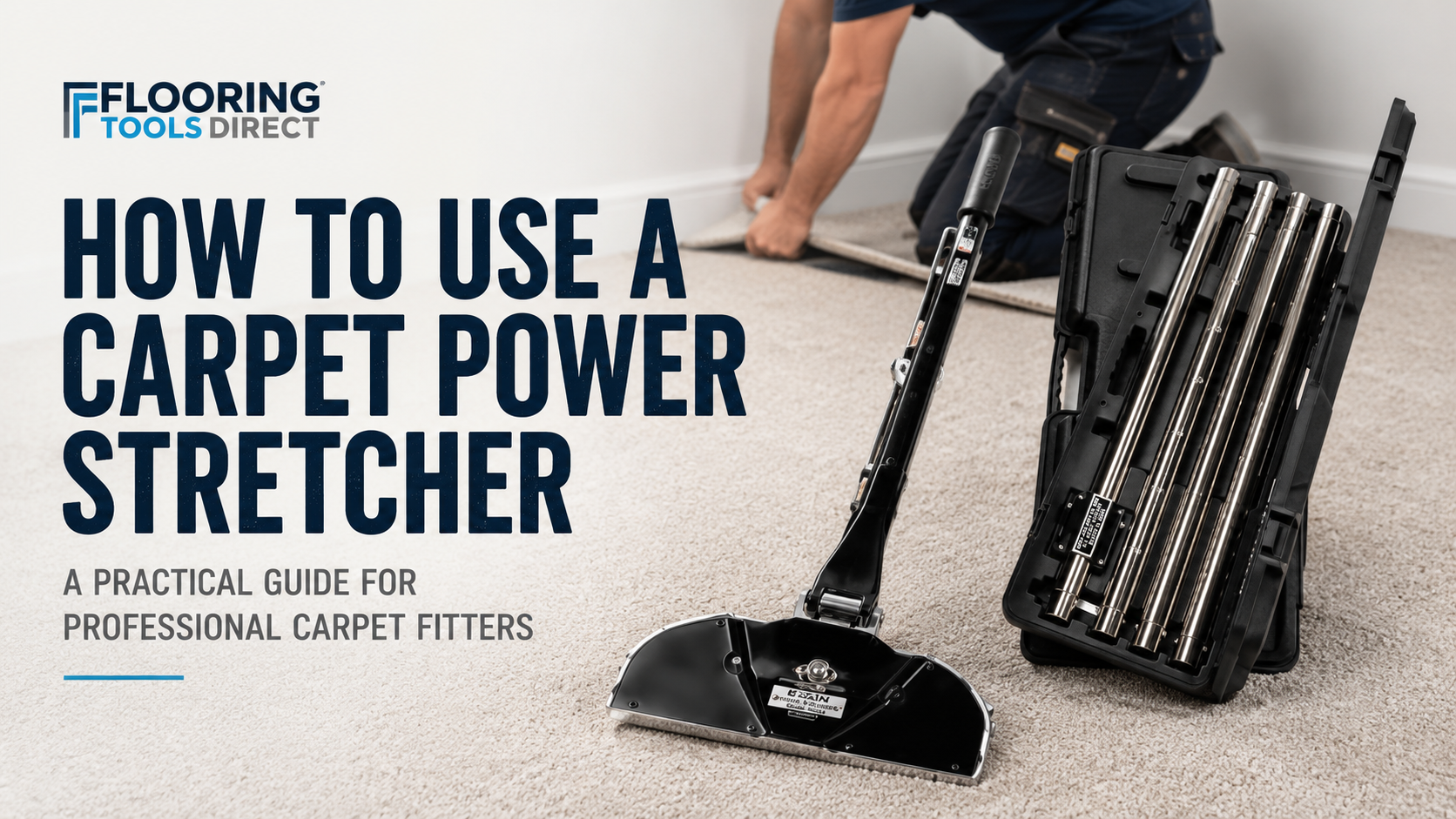
A carpet power stretcher is a professional carpet fitting tool used to stretch carpet tightly onto gripper rods. It works by bracing one end of the tool against a wall or skirting area while the stretching head grips the carpet and pushes it into tension.
Unlike a knee kicker, which is mainly used for positioning carpet and working in smaller areas, a power stretcher applies controlled force across a much larger area.
A carpet power stretcher is especially useful for:
- Larger rooms
- Commercial carpet installations
- Patterned carpets
- Wide carpet areas
- Rooms where carpet needs even tension
- Re-stretching loose or rippled carpet
- Reducing the risk of future carpet movement
Carpet Power Stretcher vs Knee Kicker: What's the Difference?
A knee kicker and a power stretcher are often used on the same job, but they do different things.
A knee kicker is used to position the carpet and hook it onto the gripper, especially near edges, corners, doorways and smaller areas.
Best for:
- Positioning carpet
- Small rooms
- Edges and corners
- Finishing work
- Adjusting carpet before final stretch
A carpet power stretcher is used to create proper tension across the carpet. It is the better choice for larger rooms and professional installations.
Best for:
- Large carpet areas
- Main stretch across the room
- Preventing ripples
- Commercial work
- Pattern matching
- Re-stretching loose carpet
A knee kicker should not be relied on as the only stretching tool for larger rooms. It can help position the carpet, but a power stretcher gives a more even and professional stretch.
When Should You Use a Power Stretcher for Carpet?
You should use a power stretcher whenever the room is too large to tension properly with a knee kicker alone.
As a simple rule, if you are fitting carpet in a normal bedroom, lounge, hallway, office or commercial space, a power stretcher is usually the correct tool for the main stretch.
You should also use one when:
- The carpet has a woven backing
- The room is wide or long
- You are fitting patterned carpet
- The customer has had issues with ripples before
- The carpet needs re-stretching
- You want a proper professional finish
Best Carpet Stretchers from Flooring Tools Direct
Below are some of the most useful carpet stretcher tools available from Flooring Tools Direct.
Best for: professional carpet fitters, patterned carpet, large rooms, trade use
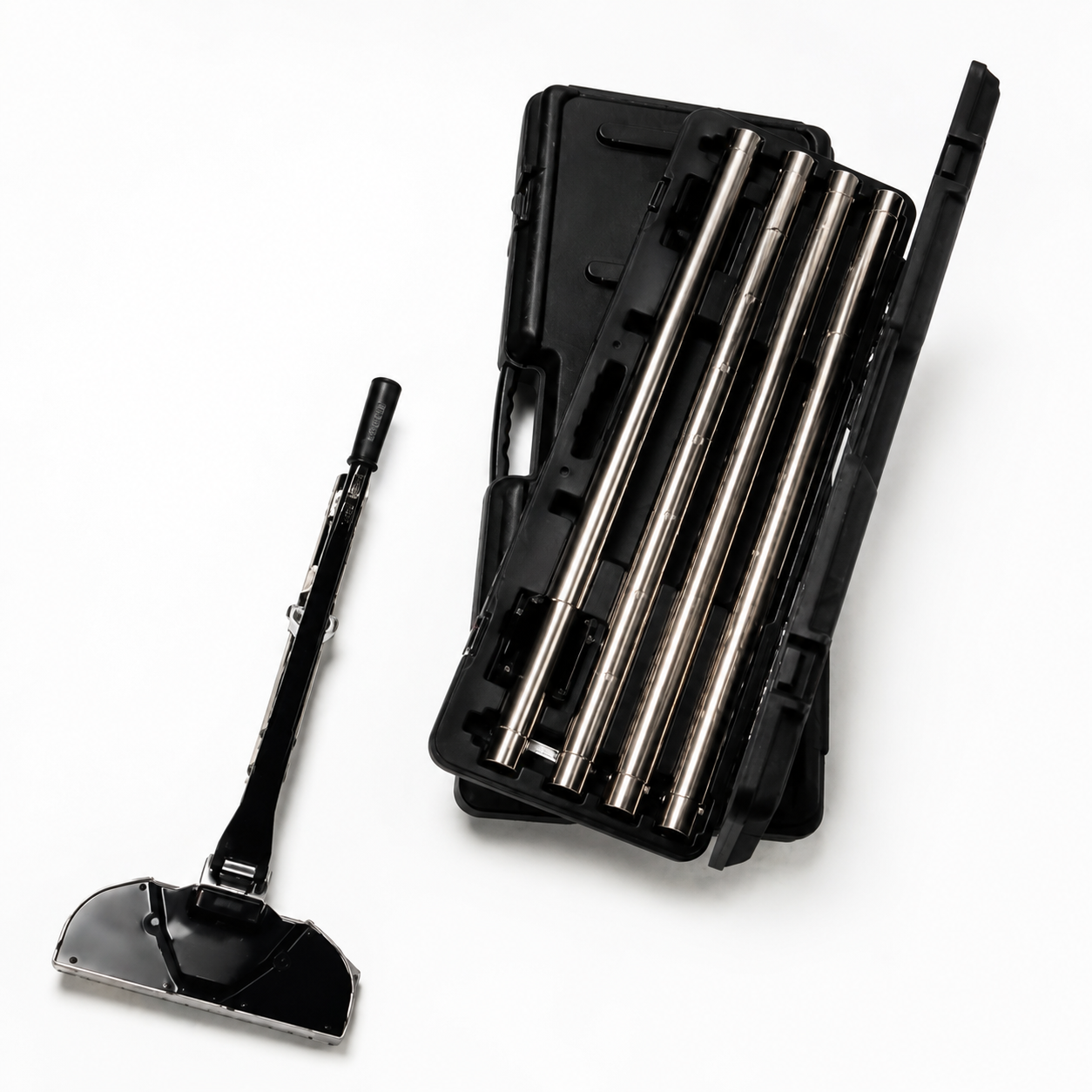
The Crain 520 Power Stretcher is one of the strongest options for professional carpet installers. It gives you the benefits of both straight and swivel heads, making it easier to work with different room shapes and carpet types.
The 60-degree swivel head is especially useful when working with patterned carpets or when you need controlled stretching at different angles. The built-in lock pin can be set in multiple positions, and the stretch lock button helps hold partial stretches while you work.
Why installers choose it:
- Suitable for professional carpet fitting
- Swivel head for angled stretching
- Good for patterned carpets
- Locking positions for control
- Stretch lock button for partial stretches
Good choice if you: Want a serious trade-level carpet power stretcher for regular professional use.
View Crain 520 Power Stretcher
Best for: carpet fitters looking for a reliable full power stretcher kit
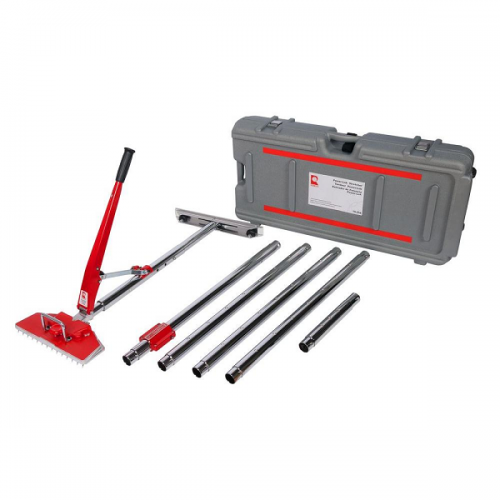
The Roberts GT Powerlok Carpet Stretcher is another strong choice for carpet installers. It comes with a low-profile swivel head, a locking device handle and aluminium extension tubes, giving you the reach needed for a wide range of rooms.
The sturdy plastic carry case is useful for storage and transport, especially if you are moving between jobs every day.
Why installers choose it:
- Low-profile swivel head
- Locking handle system
- Aluminium extension tubes
- Comes with carry case
- Good all-round carpet stretcher tool
Good choice if you: Want a complete Roberts carpet power stretcher kit for domestic and trade work.
View Roberts GT Powerlok Carpet Stretcher
Best for: seams, pattern correction, carpet repairs
The Roberts R10128 Carpet Seam Stretcher is designed for seam work. It has two stretching heads with adjustable teeth and nap grip inserts, making it useful when pulling seams together or improving alignment.
This is not a replacement for a main room power stretcher, but it is a very useful tool for installers who work with joins, repairs and patterned carpet.
Why installers choose it:
- Useful for seam correction
- Helps pull carpet sections together
- Adjustable teeth
- Comes with storage box
- Good for repair and finishing work
Good choice if you: Regularly work with carpet seams, joins, repairs or pattern matching.
View Roberts R10128 Carpet Seam Stretcher
Best for: tight spaces, re-stretching, difficult areas
The Crain 514 Mini Carpet Stretcher is a compact and versatile carpet stretcher tool. It works without tubes by hooking the tail blade attachment onto the grippers, making it useful where a conventional power stretcher is difficult to brace.
It is especially helpful for tight areas, sliding door areas, small spaces and re-stretching jobs. It also includes a seam repair attachment, which can help pull seams together for repairs or pattern matching.
Why installers choose it:
- Compact and easy to handle
- Useful in tight areas
- Works without extension tubes
- Good for re-stretching jobs
- Includes seam repair attachment
Good choice if you: Need a smaller carpet stretcher for awkward areas, repairs and re-stretching.
View Crain 514 Mini Carpet Stretcher
Best for: stairs, landings, awkward carpet fitting areas
Stairs and landings are not always practical for a full power stretcher. A stairway stretcher is designed to help fit carpet tightly in these more awkward areas.
The Crain 507 Stairway Stretcher is a useful specialist tool for fitters who regularly install carpet on stairs.
Why installers choose it:
- Designed for stair carpet fitting
- Useful in tight and awkward spaces
- Helps improve finish on stairs and landings
- Practical addition to a carpet fitter's kit
Good choice if you: Fit stairs regularly and want better control than using only a knee kicker.
View Crain 507 Stairway Stretcher
Step-by-Step: How to Use a Carpet Power Stretcher
Before using any carpet power stretcher, always follow the manufacturer's instructions for your specific tool. The steps below give a practical overview of the process used by carpet fitters.
Step 1: Prepare the Room
Before stretching, make sure the room is ready.
Check that:
- The gripper rods are fitted correctly
- The underlay is installed and trimmed
- The carpet is roughly positioned
- Doorways, alcoves and corners have been allowed for
- The carpet has been cut with enough excess for fitting
- The area is clear of tools and debris
A power stretcher works best when the carpet is already positioned correctly and the gripper is secure.
Step 2: Position the Carpet
Lay the carpet into the room and align it properly. If the carpet has a pattern, take extra time at this stage to make sure it is straight and visually correct.
Use a knee kicker lightly to position the carpet onto the gripper along one starting wall. This gives you a fixed point to stretch away from.
Do not overwork the knee kicker. Its job here is positioning, not full stretching.
Step 3: Set Up the Power Stretcher
Place the tail block of the power stretcher against the wall opposite the stretch direction. Use extension tubes to reach across the room.
The tail block should be protected so it does not damage skirting boards, walls or finished surfaces. Check that the stretcher is stable before applying force.
Then place the stretching head on the carpet, making sure the pins grip the backing properly without damaging the carpet.
Step 4: Adjust the Pin Depth
The pins on the stretching head should grip the carpet backing firmly. If they are too shallow, the head may slip. If they are too deep, they can damage the carpet.
Adjust the pin depth according to the carpet thickness and backing type.
This is an important step, especially when working with different carpet qualities.
Step 5: Stretch the Carpet
Apply pressure through the power stretcher handle to stretch the carpet towards the gripper.
The aim is to create even tension, not to over-stretch the carpet. Work steadily and avoid sudden force.
Once stretched, hook the carpet onto the gripper rod along the wall.
Step 6: Work Around the Room
Stretch the carpet in stages, working from the centre outwards and then towards the corners.
A common approach is:
- Secure one side first
- Stretch across to the opposite wall
- Work from the centre towards one corner
- Return to the centre and work towards the other corner
- Repeat on adjoining sides where needed
The exact method may vary depending on the room shape, carpet type and fitter preference.
Step 7: Use a Knee Kicker for Edges and Corners
After the main stretch has been completed with the power stretcher, use a knee kicker to position the carpet neatly around edges, corners and doorways.
This is where a knee kicker is most useful, for controlled finishing work.
Useful related tools include:
Search knee kickers here
Step 8: Trim and Tuck the Carpet
Once the carpet is correctly stretched and secured, trim the excess with a sharp carpet knife. Use a carpet tucker or stair tool to tuck the carpet neatly between the gripper and skirting.
Useful finishing tools include:
- Carpet knives
- Hook blades
- Carpet tuckers
- Stair tools
- Bolsters
- Seam rollers
Browse the carpet tools category here
Common Mistakes When Using a Carpet Power Stretcher
Using a knee kicker instead of a power stretcher
A knee kicker is not designed to fully stretch large rooms. Using only a kicker can lead to loose carpet and ripples later.
Over-stretching the carpet
Too much force can distort the carpet, especially patterned carpet. Stretch gradually and check alignment as you go.
Not checking pin depth
Incorrect pin depth can either slip during stretching or damage the carpet backing.
Poor tail block positioning
If the tail block is not stable, the stretcher can move or damage the opposite wall.
Ignoring pattern alignment
Patterned carpets need extra care. A swivel-head stretcher, such as the Crain 520 Power Stretcher, can help with angled adjustments.
Which Carpet Stretcher Tool Should You Choose?
For full room installations
Choose:
These are best for main stretching across larger rooms.
For seams and repairs
Choose:
These are useful when working with joins, repairs and pattern matching.
For tight spaces and re-stretching
Choose:
This is particularly useful where a conventional stretcher is difficult to set up.
For stairs
Choose:
This setup gives better control on stairs and landings.
Recommended Carpet Stretching Kit for Professional Fitters
A professional carpet fitter should ideally have:
- Carpet power stretcher
- Knee kicker
- Seam stretcher
- Stairway stretcher
- Carpet knife
- Hook blades
- Carpet tucker
- Stair tool
- Seam roller
- Knee pads
- Gripper cutter
- Measuring tape
This gives you the flexibility to handle full rooms, stairs, repairs, seams and awkward areas properly.
Browse carpet tools here
Browse power stretchers here
Using a carpet power stretcher correctly is one of the key skills in professional carpet fitting. It helps create the right tension, reduces the risk of ripples and gives the customer a much better finish.
For large areas, a proper power stretcher for carpet should always be part of the kit. For smaller areas, finishing work and tricky spaces, a knee kicker, mini stretcher or seam stretcher can make the job easier.
At Flooring Tools Direct, we supply a wide range of professional carpet fitting tools, including Crain power stretchers, Roberts carpet stretchers, knee kickers, seam stretchers, carpet knives, blades and finishing tools.
Shop carpet power stretchers here
FAQs
What is a carpet power stretcher used for?
A carpet power stretcher is used to stretch carpet tightly onto gripper rods, creating proper tension across the room. It helps prevent ripples, loose areas and premature wear.
Is a knee kicker the same as a carpet power stretcher?
No. A knee kicker is mainly used for positioning carpet and working around edges and corners. A carpet power stretcher is used to apply proper tension across larger areas.
Do I need a power stretcher to fit carpet?
For larger rooms and professional installations, yes. A knee kicker alone is usually not enough to achieve proper tension across the whole carpet.
What is the best carpet power stretcher for professionals?
The Crain 520 Power Stretcher and Roberts GT Powerlok Carpet Stretcher are both strong options for professional fitters. The best choice depends on your preferred features, room types and budget.
Can I use a power stretcher on patterned carpet?
Yes. A power stretcher can be used on patterned carpet, and a swivel-head model such as the Crain 520 can help when making angled adjustments for alignment.
How tight should carpet be stretched?
Carpet should be stretched enough to remove movement, wrinkles and slack, but not so much that it distorts the backing or pattern. Always follow manufacturer guidance and use the correct stretching method.
What tools do I need with a carpet power stretcher?
You will usually need a knee kicker, carpet knife, hook blades, carpet tucker, stair tool, seam roller, gripper cutter and knee pads alongside the power stretcher.
