A simple guide for concrete, timber/plywood, and anhydrite screeds
If you've ever stood on site thinking "Can I use this leveller over that?" — you're not alone. Most levelling screed failures come from one of three things:
- Wrong smoothing compound for the substrate
- Wrong substrate preparation/priming
- Wrong thickness/application technique
This guide is meant to be practical. Use it to choose the type of leveller that suits the subfloor, then always sanity-check the manufacturer's datasheet for the exact system.
Self Leveller Type Based on Subfloor
| Subfloor / situation | What you generally need | What we can supply at Toppus Group |
|---|
| Calcium sulphate / anhydrite screed | A smoothing compound formulated for calcium sulphate | Stopgap 1100 Gypsum (calcium sulphate-based) |
| Timber / plywood / raised access / metal / flexible substrates | A flexible, fibre-reinforced smoothing compound that tolerates movement | Stopgap 700 Superflex (fibre-reinforced, for flexible substrates like plywood/steel/raised access panels) |
| General internal subfloors / time-sensitive jobs | A high performance smoothing compound designed for fast prep | Stopgap 1200 PRO (two-component powder + liquid, for fast internal subfloor prep) |
| Need consistent thickness / fewer ridges | Application tools to control depth | Pin Levellers & Rakes (gauges thickness, helps avoid overusing material)
Spiked Rollers to release the bubbles |
If you're unsure what your screed actually is: anhydrite/calcium sulphate is the one installers most commonly misidentify — and using a standard cement-based leveller on it is where people get caught out.
1) Concrete / Cement Screeds (the basics)
Concrete and cement screeds are the most common subfloors, but they still catch people out when:
- the surface is dusty/weak (laitance)
- moisture is still too high
- the surface is contaminated (paint, residue, adhesive or grease)
Best practice (quick):
- Make sure the surface is sound, clean and stable
- Deal with contamination mechanically if needed
- Prime correctly (primer choice depends on absorbency and product system)
- Use a leveller that suits your time window and finish requirement
Good "fast prep" options:
Stopgap 1200 PRO is positioned as a two-component, low-odour smoothing compound engineered for fast preparation of internal subfloors.
Cemflow Renovation is a very strong base coat which can be applied at up to 50 mm in one coat. This is a perfect subfloor for sensible finishes like microcement or resin flooring.
2) Anhydrite / Calcium Sulphate Screeds (where most confusion happens)
Anhydrite (calcium sulphate) screeds need the right system. The key point is: use a smoothing compound formulated for calcium sulphate and follow the prep steps for that screed type.
What we supply:
Stopgap 1100 Gypsum is described as a calcium sulphate-based smoothing underlayment designed for anhydrite screeds.
Common installer mistake:
Treating anhydrite like standard cement screed and throwing "any leveller" at it.
Simple rule:
If it's calcium sulphate/anhydrite, choose the leveller designed for it, and follow the prep + priming requirements exactly.
3) Timber / Plywood / Flexible Substrates (why "Superflex" exists)
Timber and plywood move. Even a well-fixed floor can expand/contract slightly with temperature, footfall and seasonal changes. That's why you don't want a brittle smoothing compound over a flexible subfloor.

Example we stock:
Stopgap 700 Superflex is a fast-drying, fibre-reinforced compound designed for flexible substrates like plywood, steel, and raised access panels, with an application thickness range of 2–10mm.
Where it shines:
- plywood overlays
- raised access panels
- "mixed" areas where small movement is expected
What Thickness Should the Levelling Compound Be Poured At?
Thickness
The "right thickness" isn't about making it perfect in one hit — it's about meeting the system requirements and not overusing compound. Most levelling compounds can be installed at 5–15 mm nominal. Some can be laid at up to 50 mm nominal.
To benefit from the self levelling properties, we suggest laying it at 6 mm minimum.
Also, for uneven surfaces, lay it in 2 rounds — in this way you achieve a well levelled surface.
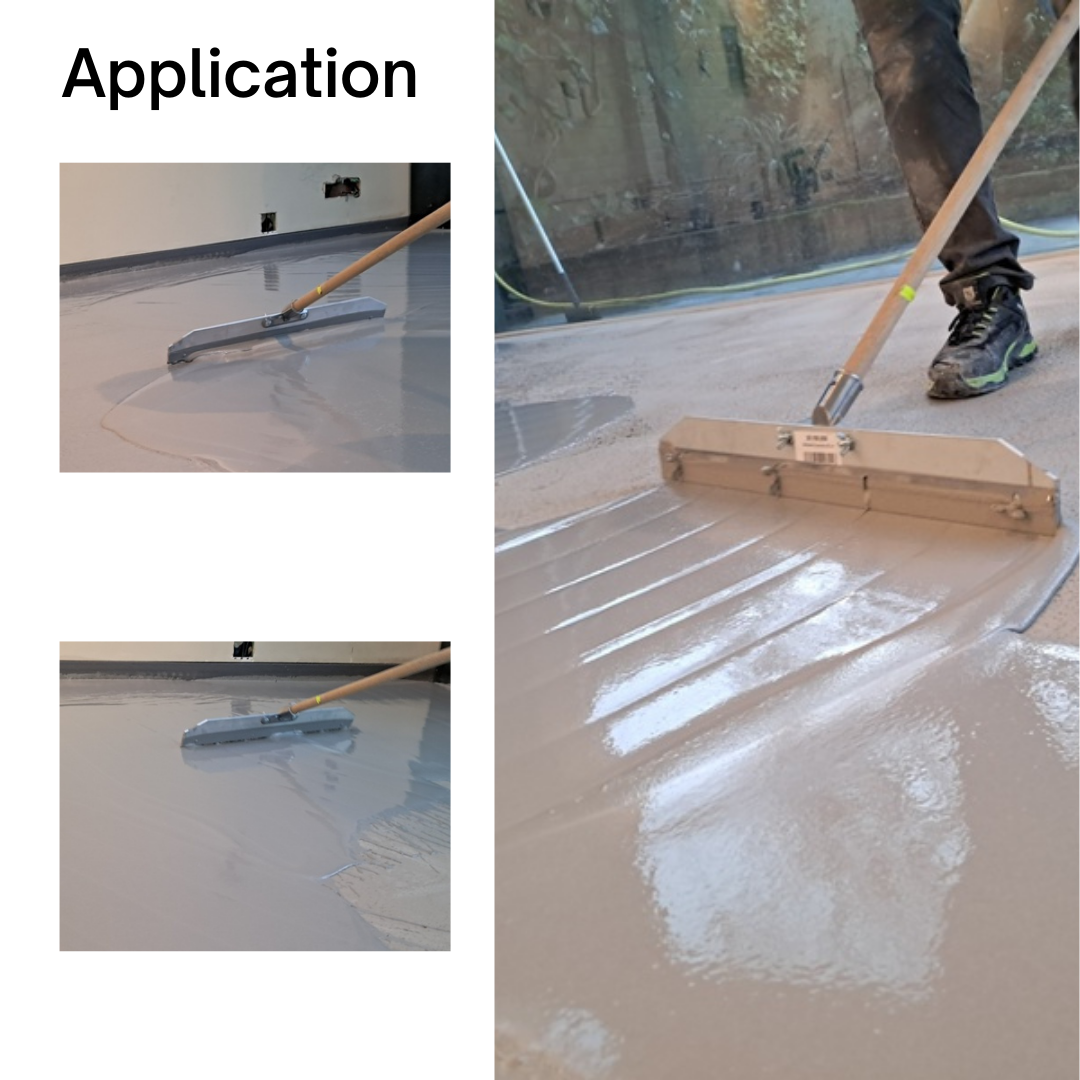
Where thickness control matters, a pin rake/screed rake helps you spread consistently.

The most popular tools for levelling compound application are:
Pin Levellers & Rakes:
MultiTool Economy Pin Leveller 58CM ; Refina Pin Leveller 60 cm ; Premium Pin Rake Leveller 58 cm
Spiked Rollers:
Spike Roller for Leveling Compound 50cm ; Wolff Spike Roller 50cm ; Metal Spiked Roller 30mm Spikes
Walk-on Times for Levelling Compound
Always follow the specific product datasheet — "fast walk-on" varies by product, thickness and site conditions. (Temperature and airflow change everything.)
Most of the time the walk-on time for a 5 mm levelling compound is 3 hours, however, based on our contractor's experience, it's a good practice to allow the material to cure overnight before you install the floor finish, be it luxury vinyl tiles, or microcement.
Common Mistakes When Installing Self Smoothing Compound
- Poor preparation of the substrate
- Skipping the primer or using the wrong one
- Pouring too thick without checking the leveller's limits
- Overworking the surface, creating ridges
- Not controlling thickness, then wondering where the bag went
- Trying to level a weak surface (it'll fail with the substrate)
The "Installer Kit" for Better Levelling Results (simple)
If you want flatter results and less waste:
- Choose the leveller to match the substrate
- Use a pin rake / screed rake to control depth
- Use a spiked roller to release the air bubbles
- Use a mixing station for bigger projects
- Keep the workflow consistent (mix ratio, mixing method, and passes)
FAQ When Laying a Levelling Compound
Can I use levelling compound over plywood?
Yes, but use a leveller designed for flexible substrates (fibre-reinforced / flexible). Stopgap 700 Superflex is positioned for plywood and other flexible subfloors. Plus, the plywood should be well reinforced and laid correctly to avoid future movements.
What levelling compound should I use on anhydrite screed?
Use a smoothing compound formulated for calcium sulphate/anhydrite screeds. Stopgap 1100 Gypsum is specifically described for that purpose.
How do I stop ridges and waves in levelling compound?
Control your thickness and passes — a pin rake/screed rake makes a big difference and helps avoid overusing material. Also, use a spiked roller.
