
A professional carpet finish is not only about the carpet itself. It depends on the preparation, the stretch, the cuts, the seams, the edges and the final tuck. For that, you need the right carpet laying tools.
Whether you are just starting in the flooring trade, building your first carpet fitting kit, or upgrading your tools for regular site work, having the correct equipment makes the job faster, cleaner and more reliable.
In this guide, we cover the essential carpet installation tools, explain what each one is used for, and highlight the carpet cutting tools and fitting equipment used by professional carpet installers.
At Flooring Tools Direct, we stock a wide range of carpet tools for both beginners and experienced fitters, including tools from trusted brands such as Crain, Roberts, Janser, Wolff, Dolphin, Sweeney Todd, Floorfit and Pajarito.
What Tools Do You Need to Lay Carpet?
A complete carpet fitting kit usually includes tools for:
For a small DIY carpet job, you may only need a basic knife, blades, tape measure, knee kicker and stair tool. For professional carpet fitting, you need a wider range of tools, including power stretchers, seam irons, trimmers, cutters and specialist finishing tools.
Browse carpet tools here: Carpet Tools
Quick Carpet Tool Checklist
| Job stage | Main tools needed |
|---|
| Measuring and planning | Tape measure, chalk line, straight edge |
| Cutting carpet | Carpet knife, Dolphin knife, hook blades, straight blades |
| Cutting underlay | Utility knife, straight blades |
| Fitting gripper | Gripper shears, hammer, nails or fixing tools |
| Stretching carpet | Knee kicker, carpet power stretcher |
| Seaming and joining | Seam iron, seaming tape, seam roller |
| Trimming edges | Carpet trimmer, wall trimmer, carpet cutter |
| Tucking and finishing | Stair tool, carpet tucker, bolster |
| Stairs and landings | Stair tool, knee kicker, stairway stretcher |
| Floor preparation | Scraper, vacuum, adhesive removal tools |
| Safety and comfort | Knee pads, gloves, safety glasses |
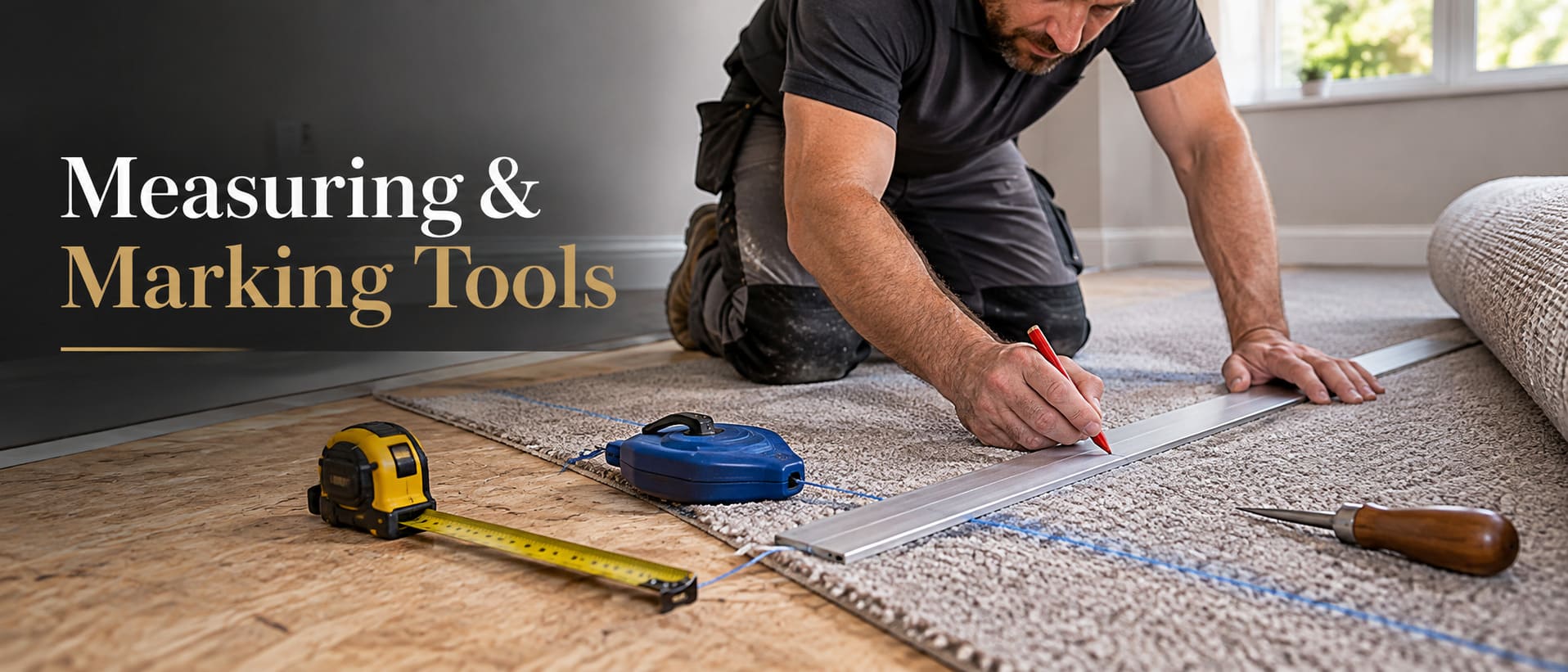
Good carpet fitting starts before the carpet is cut. Accurate measuring helps reduce waste, avoid joins in awkward places and make sure the carpet is correctly positioned before fitting.
Useful measuring tools include:
- Tape measure
- Chalk line
- Pencil or marker
- Straight edge
- Measuring square
- Carpet awl for lifting and positioning
A small measuring mistake can become expensive when working with wide carpet rolls, especially in hallways, stairs or patterned carpet installations.
Browse measuring and marking tools here: Measuring and Marking Tools
2. Carpet Cutting Tools
Cutting is one of the most important parts of carpet installation. A poor cut can ruin the finish, waste material or make the final tuck harder.
Professional carpet fitters usually carry more than one knife because different cuts need different tools.
Carpet knives and utility knives
A good carpet knife should feel comfortable, hold the blade firmly and allow controlled cutting. Popular options include:
Dolphin-style knives are popular with installers because they are practical, simple and easy to use on site.
Browse carpet knives here: Carpet Knives
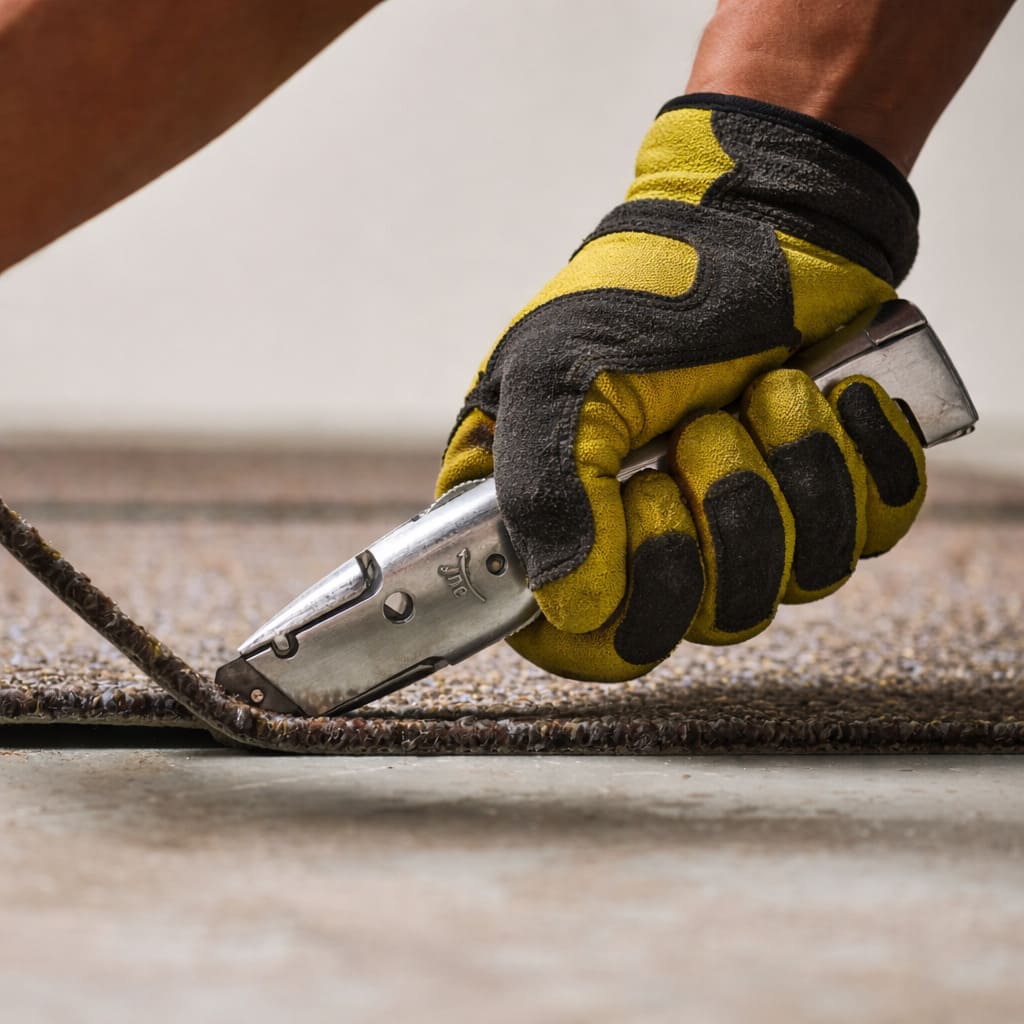
The blade matters just as much as the knife. A sharp blade gives a cleaner cut and is safer than forcing a blunt blade through the carpet.
Common carpet blade types include:
Popular blade brands include:
Hook blades are especially useful for carpet because they pull through the backing and fibres cleanly. Straight blades are useful for underlay and general cutting. Concave blades are often used for controlled trimming and detail work.
Browse carpet blades here: Carpet Blades
For larger cuts, repeat cuts, edge trimming and specialist work, carpet cutters and shears can make the job faster and neater.
Useful carpet cutting tools include:
- Carpet cutter
- Loop pile cutter
- Carpet trimmer
- Carpet shears
- Aviation shears
- Gripper shears
- Carpet border cutter
These tools help when trimming along walls, cutting carpet strips, working with carpet tiles or preparing carpets before fitting.
A carpet trimmer can be especially useful for cutting along skirting lines and producing a consistent edge before tucking.
Browse cutters, scissors and shears here: Cutters, Scissors and Shears
4. Gripper Tools
Carpet gripper needs to be cut, positioned and fixed correctly. If the gripper is poorly fitted, the carpet will be harder to stretch and may not hold properly at the edges.
Useful gripper tools include:
- Gripper shears
- Hammer
- Nails
- Fixing tools
- Measuring tape
- Safety gloves
Roberts gripper shears are a useful option for cutting carpet gripper cleanly and safely.
When fitting gripper, always leave the correct gap between the gripper and skirting so the carpet can be tucked neatly.
Browse carpet tools here: Carpet Tools
A knee kicker is one of the most recognised carpet installation tools. It is used to position and locally stretch carpet onto the gripper rods.
A knee kicker is useful for:
- Edges
- Corners
- Small rooms
- Doorways
- Stairs
- Final positioning
- Finishing after power stretching
Popular options include Roberts knee kickers, Crain knee kickers and economy knee kickers. For occasional use, an economy model may be enough. For professional fitters, Roberts and Crain models usually offer better adjustment, grip and durability.
Browse knee kickers here: Knee Kickers
Check this article for more information on the Knee Kickers and How To Use It: How to Use a Knee Kicker: Best Knee Kickers for Carpet Fitters

6. Carpet Power Stretchers
A knee kicker is useful, but it should not replace a carpet power stretcher on larger rooms.
A carpet power stretcher is used to apply even tension across the carpet. This helps prevent ripples, loose areas and premature wear.
Use a power stretcher for:
- Large rooms
- Lounges
- Bedrooms
- Hallways
- Commercial jobs
- Patterned carpets
- Re-stretching loose carpet
Popular carpet stretcher tools include Crain and Roberts power stretchers.
Browse power stretchers here: Power Stretchers
Check this article for more information on how to use a Carpet Power Stretcher: How to Use a Carpet Power Stretcher: A Practical Guide for Professional Carpet Fitters
Carpet seams need to be strong, flat and as discreet as possible. This is especially important in larger rooms, commercial spaces and patterned carpets.
Useful seaming tools include:
- Seam iron
- Heat bond tape
- Seam roller
- Carpet seam stretcher
- Seaming weights
- Carpet trimmer
- Sharp blades
A seam iron melts the adhesive on heat bond tape, while a seam roller helps press the carpet backing into the adhesive and blend the join.
Crain and Roberts tools are often used by professional carpet fitters for seaming and joining work.
Browse seaming and joining tools here: Seaming and Joining Tools
8. Stair Tools, Tuckers and Bolsters
The final finish around the perimeter is what customers notice. Once the carpet is stretched and trimmed, it needs to be tucked cleanly between the gripper and skirting.
Useful finishing tools include:
- Stair tool
- Carpet tucker
- Carpet bolster
- Chisels
- Edge tools
A stair tool is also essential when fitting carpet on stairs, helping form the carpet into the crease and around stair nosings.
Browse bolsters and chisels here: Bolsters and Chisels
For stairs, underlay, nosings and certain installation details, staplers and nailers can save time and improve fixing strength.
Useful tools include:
- Carpet stapler
- Hammer tacker
- Pneumatic stapler
- Compressor
- Staples
- Nailers
These are especially useful for:
- Stair runners
- Underlay fixing
- Upholstery-style carpet work
- Commercial fitting
- Timber staircases
Browse staplers, nailers and compressors here: Staplers, Nailers and Compressors
Before fitting carpet, the subfloor should be clean, dry, sound and free from sharp debris or loose material.
Useful floor preparation tools include:
- Floor scraper
- Adhesive removal tools
- Vacuum
- Moisture meter
- Grinder where needed
- Underlay cutting tools
If the subfloor has old adhesive, lumps, loose material or damaged areas, the carpet may not sit properly. Good preparation gives a better finish and reduces the chance of problems later.
Browse floor preparation tools here: Floor Preparation Tools
Carpet fitting is tough on the body. Good knee protection is essential, especially if you are working on stairs, gripper, concrete subfloors or full-day installations.
Useful safety and comfort gear includes:
- Knee pads
- Gloves
- Safety glasses
- Dust mask
- Work trousers
- Blade disposal box
For professional installers, knee pads are not an optional extra. They are part of working safely and protecting your body over time.
Browse knee pads here: Knee Pads
Beginner Carpet Laying Tool Kit
If you are just starting out, you do not need every tool on day one. A basic beginner kit could include:
- Tape measure
- Carpet knife
- Hook blades
- Straight blades
- Knee kicker
- Stair tool
- Carpet tucker
- Hammer
- Gripper shears
- Seam roller
- Knee pads
- Gloves
This is enough for small domestic work, repairs, simple rooms and learning the basics.
Professional Carpet Installation Tool Kit
For professional carpet fitters, a more complete kit should include:
- Tape measure
- Chalk line
- Dolphin knife or carpet knife
- Hook blades
- Straight blades
- Concave blades
- Carpet cutter
- Carpet trimmer
- Gripper shears
- Knee kicker
- Carpet power stretcher
- Seam iron
- Heat bond tape
- Seam roller
- Stair tool
- Carpet tucker
- Bolster
- Carpet stapler
- Compressor where needed
- Floor scraper
- Vacuum
- Knee pads
- PPE
This setup allows you to handle bedrooms, lounges, stairs, hallways, seams, repairs and professional installations.
Best Carpet Laying Tools by Job Type
| Job type | Recommended tools |
|---|
| Small bedroom carpet | Knife, blades, knee kicker, stair tool |
| Larger room | Power stretcher, knee kicker, carpet trimmer |
| Stairs | Stair tool, knee kicker, stapler, bolster |
| Carpet seams | Seam iron, heat bond tape, seam roller |
| Carpet cutting | Dolphin knife, hook blades, carpet cutter |
| Gripper fitting | Gripper shears, hammer, gloves |
| Underlay cutting | Utility knife, straight blades |
| Carpet repairs | Carpet knife, blades, seam tools, carpet awl |
| Professional fitting | Full kit with stretcher, kicker, seaming tools and PPE |
Common Mistakes When Choosing Carpet Installation Tools
Buying only cheap knives and blades
Cheap or blunt blades make cutting harder and can ruin the edge. Professional carpet fitters change blades often.
Using a knee kicker instead of a power stretcher
A knee kicker is useful for positioning, but larger rooms need a power stretcher to achieve proper tension.
Not carrying spare blades
Running out of blades mid-job slows everything down. Keep hook, straight and concave blades in your kit.
Ignoring seam tools
A poor seam can spoil an otherwise good installation. Use the right seam iron, tape and roller.
Forgetting comfort and safety
Knee pads, gloves and safe blade storage are just as important as the main tools.
Final Thoughts
The best carpet laying tools are the ones that help you work accurately, safely and efficiently. For beginners, start with the basics: a good knife, blades, knee kicker, stair tool and knee pads. For professional carpet installers, build a complete kit that covers measuring, cutting, stretching, seaming, stairs, trimming and finishing.
At Flooring Tools Direct, you can find a wide range of carpet laying tools, carpet installation tools and carpet cutting tools from trusted trade brands including Crain, Roberts, Janser, Wolff, Dolphin, Sweeney Todd, Floorfit and Pajarito.
Browse carpet tools here: Carpet Tools
Browse carpet blades here: Carpet Blades
Browse carpet knives here: Carpet Knives
FAQs
What tools do I need to lay carpet?
To lay carpet, you usually need a tape measure, carpet knife, hook blades, gripper tools, knee kicker, stair tool, carpet tucker, seam roller and knee pads. For larger rooms, you should also use a carpet power stretcher.
What are the most important carpet installation tools?
The most important carpet installation tools are a carpet knife, hook blades, knee kicker, power stretcher, stair tool, carpet tucker, seam iron and seam roller.
What carpet cutting tools do professionals use?
Professional carpet fitters commonly use Dolphin knives, utility knives, hook blades, straight blades, carpet cutters, carpet trimmers and specialist blades from brands such as Roberts, Sweeney Todd, Floorfit, Crain and Pajarito.
Can I lay carpet without a knee kicker?
For very small areas, it may be possible, but a knee kicker makes the job much easier and helps position the carpet onto the gripper. For professional results, a knee kicker is highly recommended.
Do I need a carpet power stretcher?
For larger rooms, yes. A power stretcher helps apply proper tension across the carpet and reduces the risk of ripples or loose areas after fitting.
What is the difference between a knee kicker and a power stretcher?
A knee kicker is used for positioning and local stretching around edges, corners and smaller areas. A power stretcher is used to stretch carpet properly across larger rooms.
What blades are best for cutting carpet?
Hook blades are commonly used for cutting carpet because they pull through the backing and fibres cleanly. Straight blades are also useful for underlay and general cutting.
What tools are needed for carpet seams?
For carpet seams, you usually need a seam iron, heat bond tape, seam roller, carpet knife and sharp blades. For repairs or pattern work, a carpet seam stretcher may also be useful.
What tools do I need for fitting carpet on stairs?
For stairs, useful tools include a carpet knife, hook blades, knee kicker, stair tool, carpet tucker, bolster, stapler and knee pads.
Are professional carpet tools worth it?
Yes. Professional carpet tools are designed to make fitting faster, safer and more accurate. They also help reduce mistakes, improve the finish and save time on site.
